Doggy Bag
0Spend $80.00 more and receive FREE SHIPPING on your order!
Members get free shipping at $50!
Your Cart Is Empty
Login to check out faster.
Subtotal$0.00
Whether it’s taking a dip in the pool, getting out on your paddle board, or splashing around in the waves at the beach, summer and water activities go hand in hand. Taking to the water is a great way to keep cool in the sweltering heat of the season, get a little exercise and relax your mind a bit. Water activities can also a great way to bond with your dog.
Most dogs love to splash around in water (unless it’s bath time). And in fact, many breeds are built for swimming. Dogs originally bred to be used for various water activities are typically the best swimmers. Their developed physical characteristics, like webbed feet, water repellent coats, long legs, and rudder-like tails provide them with the necessary tools for swimming.
Read on to learn more about some of the best swimmers and what makes them so heckin’ good at it.
(Note: If you are planning on taking your pup on aquatic adventures this summer, don’t forget to take your Adventure Life Jacket. Safety first, y’all!)
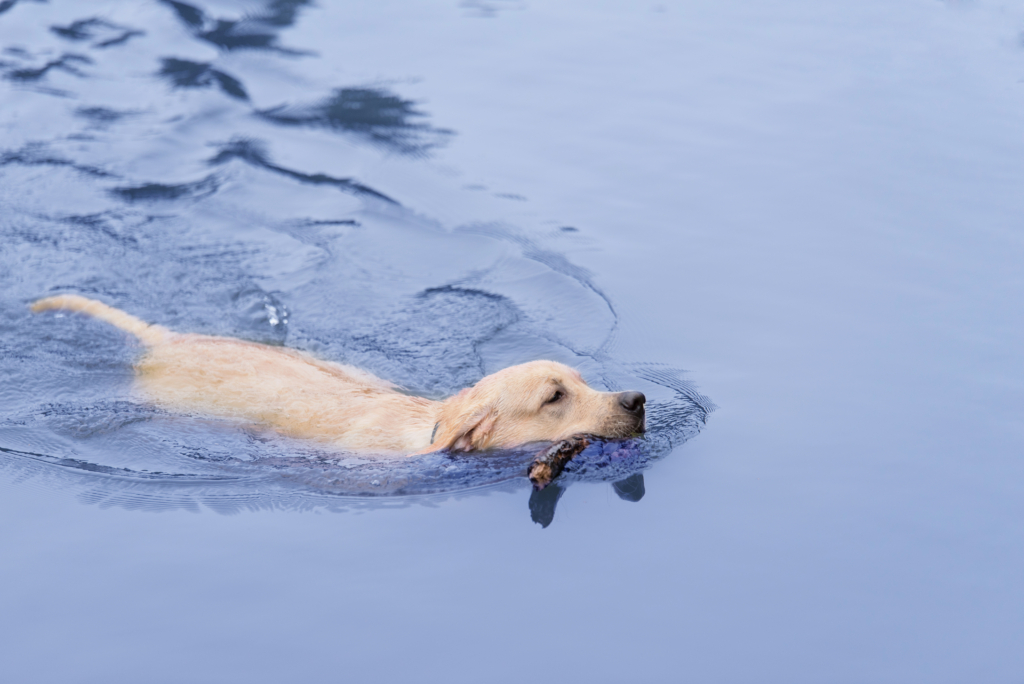
America’s most popular dog breed, the Labrador Retriever, is also one of its best swimmers. Descended from the St. John’s water dog, their ancestors were originally bred to work alongside fisherman on the Canadian Island of Newfoundland. Toss a stick in the water and watch this friendly, outgoing, and high-spirited dog fetch it with ease.
So, what makes Labradors such great swimmers? They have a dense, double coat that is water resistant and protects them against the coldness of natural rivers and ponds. They also have a wide otter tail that acts as a rudder which helps them steer and prominent webbed toes designed to propel them through the water.
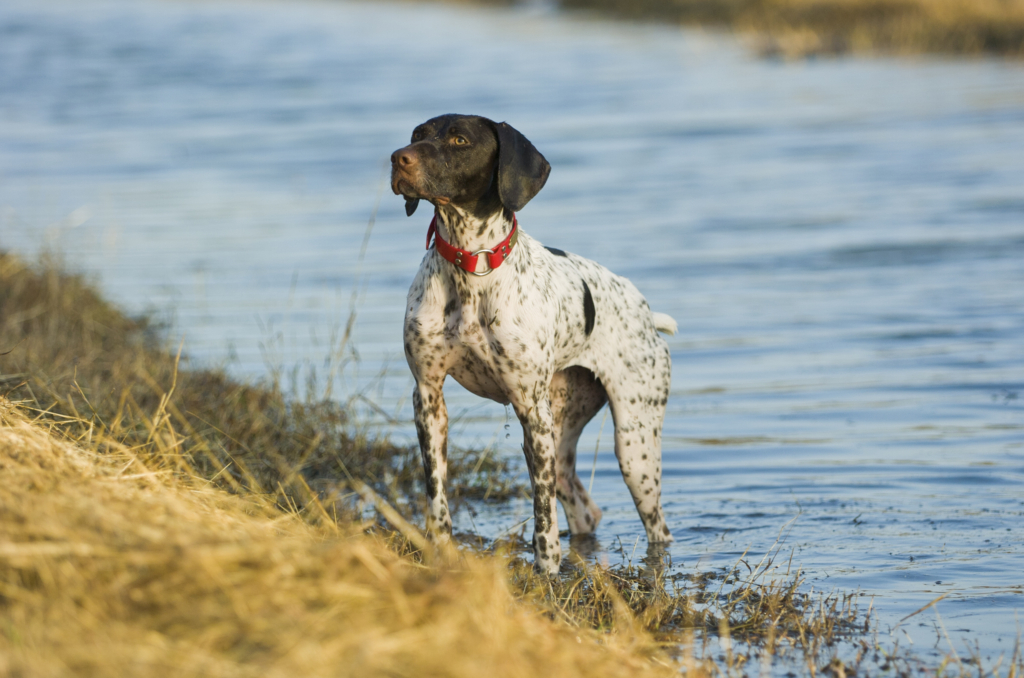
Bred to be an all-purpose hunting dog, the German Shorthaired Pointer (also known as the GSP) is a renowned hunter, pointer, and retriever, both on land and in water. They’re prized for their keen sense of smell, natural athleticism, temperament, intelligence, and enthusiasm. They make wonderful companions for active people and will gladly join you on any adventure outside of the home – especially swimming.
In addition to having a water-resistant coat and webbed paws, the GSP possesses a lean and muscular build that contributes to their swimming capabilities. Their streamlined frame allows them to move swiftly through the water, with their paw strokes powered by their muscular build. They also have the stamina to swim for hours on end. However, it’s worth noting that due to their short coat, prolonged swimming in colder waters is not recommended for GSPs.
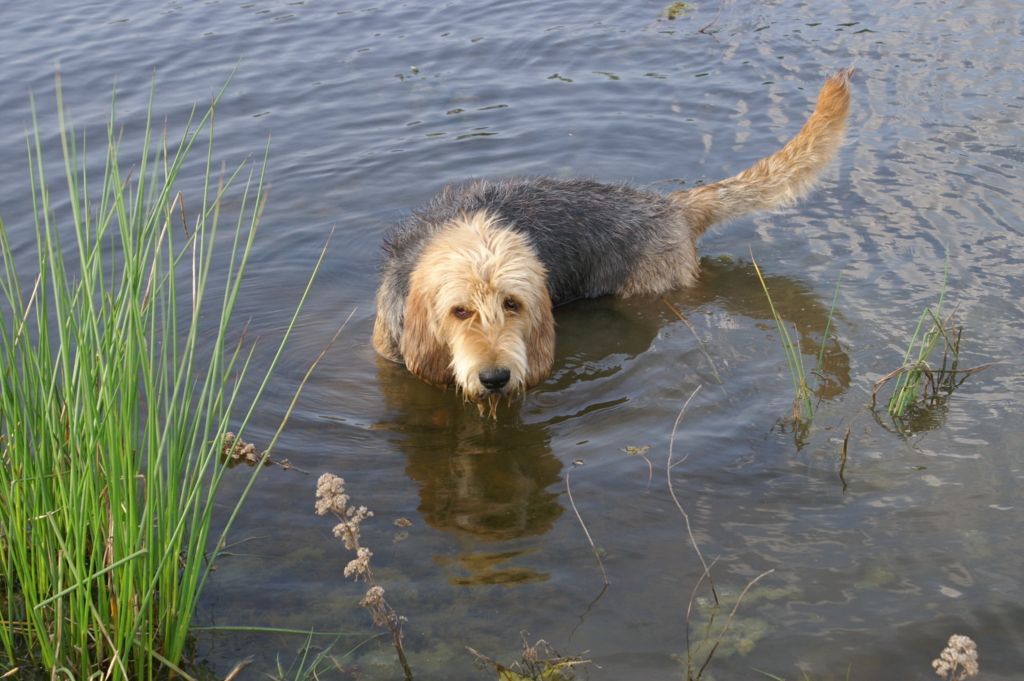
One of the rarest dog breeds in the world, the Otterhound was originally bred to control the otter populations in medieval England. With their keen sense of smell, swimming skills, large size and impressive strength, Otterhounds were used in packs to guard fish (a valuable food source) from being preyed upon by otters in ponds, rivers, and streams.
The Otterhound is quite simply built to be an expert swimmer. Its broad chest and strong shoulders enable it to swim for hours on end without tiring. And its dense waterproof coat, webbed feet, heightened sense of smell, and swimming confidence once made them the perfect breed for hunting otters. So good, in fact, that river otters in England nearly went extinct.
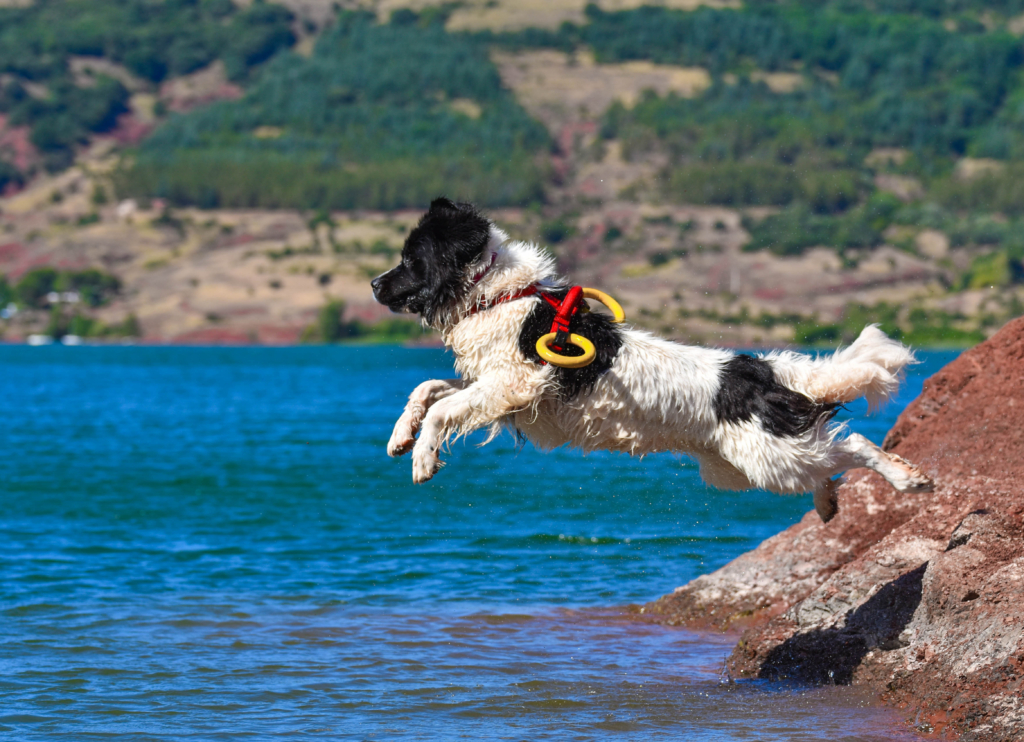
The Newfoundland, affectionately known as the Newfie, is a gentle giant that comes from the Newfoundland Island of Canada. Renowned for its size, strength, and innate ability to swim, the Newfoundland was a popular working dog. Once used by fisherman to haul nets, the Newfie gained a storied reputation as a water rescue dog and is still used as such today.
Thanks to its large, muscular build, water-resistant double coat, and big, webbed paws, the Newfie can power through choppy water and waves with relative ease. Legends abound about the breed’s heroics at life-saving water rescues, but many have been documented by multiple sources. Today, Newfies are used as search and rescue dogs, and even serve in a special K9 lifeguard unit of the Italian Coast Guard.
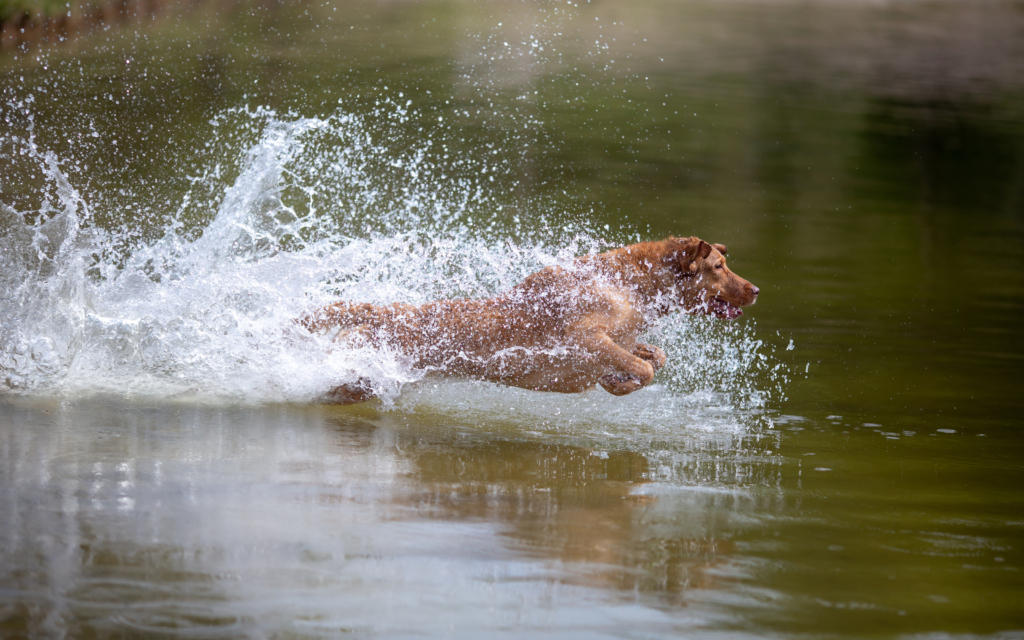
Bred to retrieve waterfowl from the frigid waters of the Chesapeake Bay, the “Chessie” is considered one of the toughest water retrievers. The breed is believed to have descended from two Newfoundland dogs named Sailor and Canton who were rescued from a shipwrecked boat off the coast of Maryland in 1807. Breeding the pair with other local dogs likely produced the Chesapeake Bay Retriever we know today.
The Chessie’s thick, oily double coat is insulating and waterproof, repelling water much like the way duck feathers do. Their powerful muscular body allows them to plow through icy waters with ease, and their sturdy and strong legs with large, webbed feet help propel them along. Perfectly equipped for their primary function as a retriever, Chessies are capable of retrieving hundreds of ducks in a single day.
Not all squeaks are created equal. At ZippyPaws®, we don’t just add noise to our dog toys – we engineer our own patented noisemakers. The ...Continued
At ZippyPaws, we’re all about playtime – but we’re even bigger fans of safe playtime for pups. Toys bring joy, enrichment, and tail-wagging fun, but ...Continued
At ZippyPaws, one of our favorite parts of what we do is seeing how our toys take on a life of their own in the ...Continued